




If your makeup looks uneven or patchy, the issue is often your brush, not your products.
Makeup artists do not pick brushes at random. Each brush has a clear role. It affects how makeup sits on the skin, how it blends, and how long it lasts.
Many beginners feel confused by the number of brushes available. The truth is simple: professionals use specific brushes for specific results.
Once you understand what they use and why, your results improve fast.
What Makes Professional Makeup Brushes Different?
Professional brushes are made for control and consistency. They help artists apply makeup in thin layers and blend it without harsh lines.
Brush Shape and Density
Dense brushes give more coverage. Soft, fluffy brushes spread product lightly. This is why the same foundation can look heavy with one brush and smooth with another.
Better Product Control
Professionals do not apply a lot of product at once. They build it slowly. Good brushes help control how much product touches the skin.
Synthetic vs Natural Brushes
- Synthetic brushes work best with liquid and cream products
- Natural brushes are often used with powders
Most artists now use high-quality synthetic brushes because they are easier to clean and perform well across products.
Essential Professional Makeup Brushes and Their Uses
Instead of using one brush for everything, makeup artists use specialized tools for each step of the application process.
Foundation Brushes Used by Makeup Artists
Flat Foundation Brush
This brush is used for precise product placement. Makeup artists apply foundation in thin layers using controlled strokes, especially around areas like the nose and under the eyes. It helps distribute the product evenly before blending.

Pro Stippling Brush
This is one of the most important brushes for achieving a soft, airbrushed finish. Used with a tapping (stippling) motion, it diffuses foundation into the skin without dragging it. This reduces streaks and creates a natural-looking base.

Angled Buffer Brush
For full coverage and seamless blending, professionals rely on dense brushes like an angled buffer.
It’s used in buffing motions to smooth foundation into the skin, eliminating lines and creating an even finish.
Eye Makeup Brushes Professionals Use
Blending Brush
A soft blending brush is essential for diffusing eyeshadow edges. It prevents harsh lines and creates smooth transitions between shades.
Tapered Blending Brush
This brush offers more precision in the crease. Makeup artists use it to control depth and blend smaller areas without disturbing the entire eye look.
Domed Crease Brush
Used to add dimension, this brush places and blends deeper shades into the crease. It helps create structure and definition in eye makeup.
Face Brushes for Finishing
Large Powder Brush
Professionals use a large, fluffy brush to apply powder lightly and evenly. This prevents over-powdering, which can make the skin look dry or cakey.

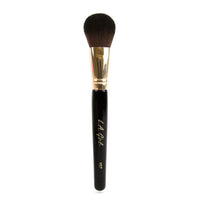
Blush Brush
A blush brush is shaped for controlled color placement on the cheeks. It allows artists to build pigment gradually rather than applying too much at once.

Why Makeup Artists Also Use Sponges
Even with the best brushes, most professionals finish with a sponge.
Sponges are used to:
- Press the product into the skin
- Remove excess makeup
- Smooth out the texture
Tools like the 2 Pack Blending Sponge or Angled Blending Sponge with Stand help refine the final finish, especially after foundation and concealer.

How Makeup Artists Choose the Right Brush
Brush selection isn’t random; it depends on several factors:
Product Type
- Liquids → Dense synthetic brushes or sponges
- Powders → Fluffy brushes
Coverage Level
- Sheer → Light, airy brushes
- Full coverage → Dense buffing brushes
Skin Type
- Textured skin → Softer brushes to avoid emphasizing pores
- Oily skin → Brushes that allow thin layering
Desired Finish
- Natural → Stippling + sponge
- Full glam → Buffing + layering
In real workflows, makeup artists often switch brushes mid-application to control the finish.
Brush Techniques Used by Professionals
The brush matters, but technique matters more.
Buffing vs Stippling
- Buffing: Circular motion for full coverage
- Stippling: Tapping motion for a diffused finish
Pressing vs Sweeping
- Pressing: Builds coverage without streaks
- Sweeping: Can move product and create unevenness
Layering Product
Professionals apply thin layers instead of one heavy coat.
Using Multiple Brushes
It’s common to use:
- One brush for placement
- Another for blending
- A sponge for finishing
Beginner vs Professional Brush Kits
Beginner Kit
A basic kit might include:
Professional Kit
A pro kit includes:
- Multiple foundation brushes (for different finishes)
- Several eye brushes for precision work
- Specialized brushes for each step
Professionals don’t rely on one tool, they build a system.
Common Mistakes When Choosing Makeup Brushes
-
Using one brush for everything
Leads to muddy blending and poor results -
Choosing the wrong brush density
Too dense = heavy makeup
Too soft = lack of coverage -
Ignoring brush quality
Low-quality brushes shed and blend poorly -
Not cleaning brushes properly
Causes product buildup and uneven application -
Using large brushes for detailed areas
Reduces precision and control
Understanding these mistakes can dramatically improve results.
Pro Makeup Artist Tips for Better Results
- Start with fewer products and build gradually
- Use tapping motions for the foundation
- Blend longer than you think is necessary
- Switch brushes instead of overloading one
- Use a sponge to perfect the final finish
Small adjustments in technique often make the biggest difference.
Frequently Asked Questions
What brushes do makeup artists use daily?
Foundation brushes, blending brushes, powder brushes, and crease brushes are used in almost every routine.
Are expensive makeup brushes worth it?
High-quality brushes offer better blending, durability, and control, making them a worthwhile investment.
Is a sponge better than a brush?
Neither is better, they serve different purposes. Professionals often use both together.
How many brushes do you really need?
A beginner can start with 4–6 essential brushes, while professionals use a wider range for precision.
How do professionals get flawless blending?
By combining the right brushes, proper techniques, and gradual product layering.
Final Thoughts
Professional makeup artists don’t just rely on good products; they rely on the right tools and techniques.
The type of brush you use directly affects:
- Coverage
- Blending
- Overall finish
By understanding how different brushes work and when to use them, you can dramatically improve your makeup results.
Building a brush collection isn’t about having more tools. It’s about having the right tools for the right technique.
If you want to refine your skills further, explore more guides on how to choose the right makeup brushes and learn the benefits of high-quality makeup brushes to elevate your routine.